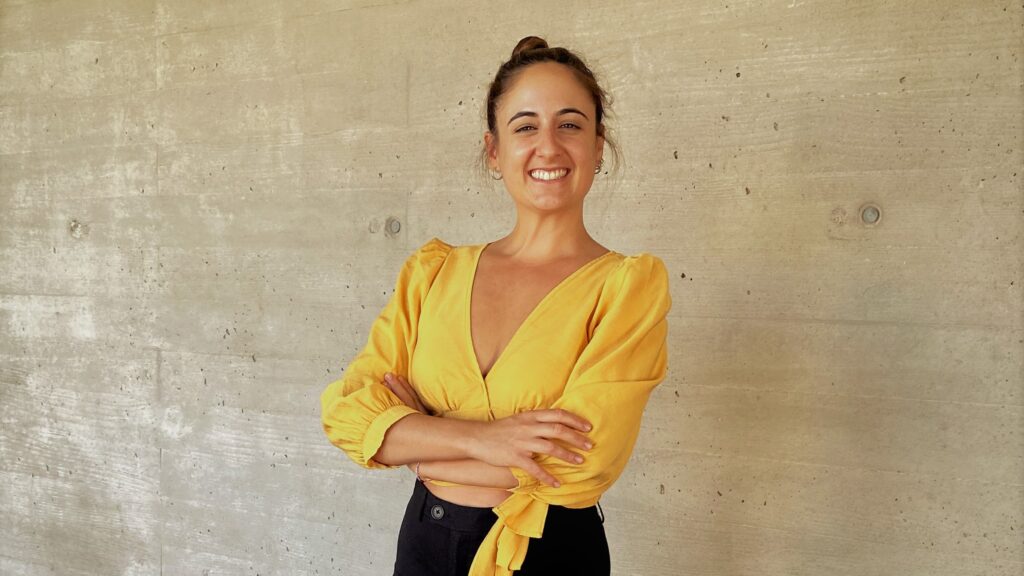
María Rodríguez García (For citations/databases: M. Rodriguez-Ayllon) holds a degree in Physical Activity and Sports Sciences from the University of Granada. In 2017, she began her Ph.D. in Biomedicine, where she explored the role of physical activity on mental and brain health during childhood and adolescence. In 2020, she earned her Ph.D. from the University of Granada with international distinction and was awarded the Extraordinary Doctorate Award.
In 2021, she received a two-year international scholarship from the Ramón Areces Foundation to continue her research at the Erasmus University Medical Center in Rotterdam (Netherlands). During this period, she was constantly surrounded by researchers from various fields, which allowed her to view health from a multidisciplinary, person-centered perspective. Additionally, she published articles in high-impact journals (such as JAMA Psychiatry). She also received further funding from the Alicia Koplowitz Foundation and participated as an expert in physical activity and health in European networks focused on preventive and personalized medicine, such as ALIVE (A Life Course and Individual-based View on Lifestyle to Enhance Health) and ExACT (European Network Staff Exchange for Integrating Precision Health in Health Care Systems). Her professional journey is marked by its international and multidisciplinary nature, as well as her approach to health from a preventive, individualized perspective—key aspects for advancing toward a more active, healthy society.
In 2024, she joined the Biomedical Research Center of Málaga under a postdoctoral Sara Borrell contract within the SAMSERAP research group, which specializes in designing, developing, and evaluating digital tools for the prevention of common mental disorders such as depression and anxiety. Her goal is to increase physical activity levels in young people and protect their mental health through a multidisciplinary, individualized, inclusive, and innovative approach.
What was the objective of the visit?
- To learn about ongoing projects at SESCS.
- To establish new synergies among groups and strengthen existing ones.
- To learn about co-creation methodologies and person-centered care.
- To learn about the implementation of digital tools within the National Health System.
- To learn about systems and tools for evaluating digital health tools, especially those that aid in shared decision-making between professionals and patients.
Why did you choose SESCS?
Because I admire its values and approach to healthcare from a preventive, multidisciplinary, and person-centered perspective. Also, for its expertise in co-creation, development of decision-making support tools, patient empowerment, and the evaluation and implementation of digital tools within the healthcare system.
How will you apply, or how might you benefit from, the activities conducted in collaboration with SESCS in your current professional work?
By incorporating the knowledge I gained into my current and future research projects. During my stay at SESCS, I understood the importance of ensuring that scientific results are useful, accepted, and transferable to our society.
Did this visit meet your expectations?
Yes, and they were even exceeded, not only due to the scientific and professional quality but also due to the human quality.