
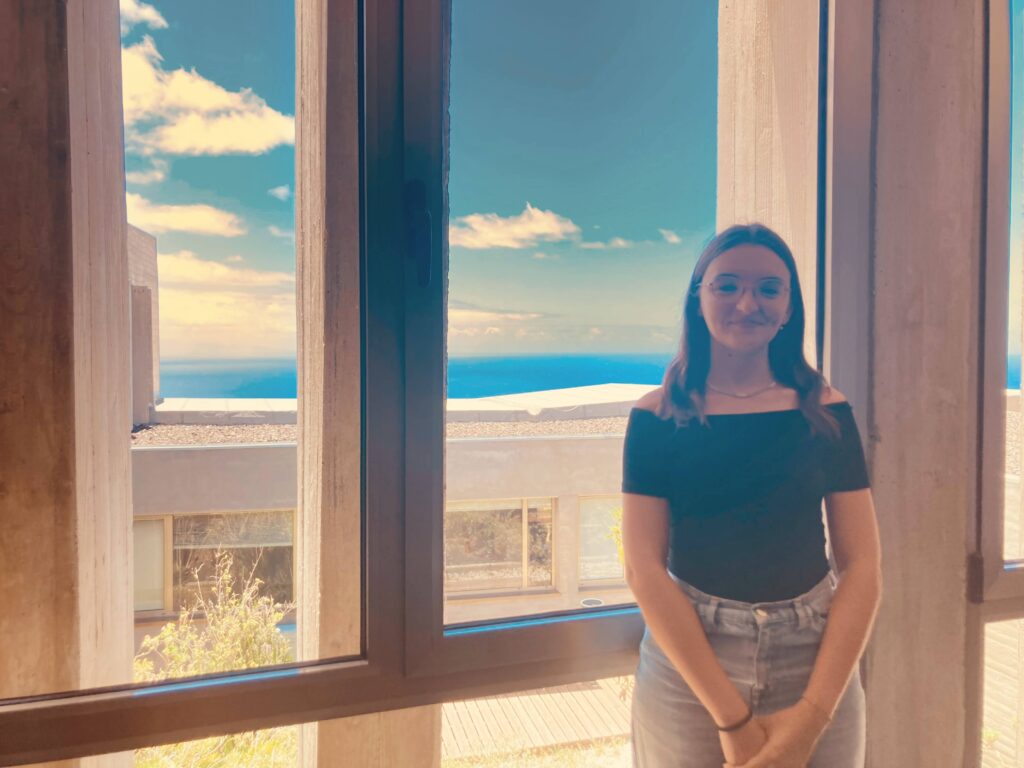
Lena Arnal Artiaga, a graduate in Psychology from the University of Granada (UGR), always knew she was interested in clinical psychology and social intervention. Therefore, she pursued a Master’s degree in General Health Psychology, also at UGR. Throughout her training, she dismissed the possibility of working in research, feeling it was an almost impossible path. Thanks to this opportunity, she is challenging her preconceived ideas, opening new doors, and learning new skills.
Regarding the INVESTIGO program, what do you think of these types of initiatives?
I believe it is a great opportunity to introduce young people to the world of research, which is often seen as a difficult field to break into (at least that has been my impression throughout my training).
How do you think your participation in the INVESTIGO program will contribute to your long-term professional development?
Simply being in contact with so many professionals from different fields makes this experience very enriching. In my case, I am exposed to areas of knowledge in which I have little prior experience, so I am discovering new paths and interests as a psychologist.
What aspects would you highlight about the contributions you are making to the projects you are working on?
On one hand, my role involves supporting different projects, which I believe is important and necessary work as it helps free up the schedules of other professionals working on multiple projects at SESCS. On the other hand, in the projects where I am more actively involved, I try to bring enthusiasm, new ideas, and apply everything I have learned during my years of training as a psychologist.
What are the main challenges you have faced as a participant in this program, and how have you overcome them?
As I mentioned before, research is quite a new area for me, so everything I am encountering at SESCS is new and, therefore, challenging. I find my work on the qualitative aspects of the projects challenging since my training has always been linked to the quantitative method. Additionally, understanding the procedures and ways of working at SESCS is entirely new to me, so learning how it operates and the steps needed to carry out a research project has also been a challenge.
How has your experience been working at SESCS? How would you describe the work environment, and what do you think about the organizational aspect?
From the very beginning, we were welcomed with open arms, so my experience at SESCS has been quite positive, though I find the most support comes from my fellow “investigo” colleagues.