Predictores sociodemográficos y clínicos de la adherencia a los antidepresivos en los trastornos depresivos: una revisión sistemática con un metanálisis

SESCS PUBLICATION: STRATUM project: AI-based point of care computing for neurosurgical 3D decision support tools

Himar Fabelo, Raquel Leon, Emanuele Torti, Santiago Marco, Asaf Badouh, Max Verbers, Carlos Vega, Javier Santana-Nunez, Yann Falevoz, Yolanda Ramallo-Farina, Christian Weis, Ana M Wagner, Eduardo Juarez, Claudio Rial, Alfonso Lagares, Gustav Burstrom, Francesco Leporati, Luis Jimenez-Roldan, Elisa Marenzi, Teresa Cervero, Miquel Moreto, Giovanni Danese, Svitlana Zinger, Francesca Manni, Maria Luisa Alvarez-Male, Miguel A. García-Bello, Lidia García, Jesus Morera, Juan F. Pineiro, Chrysanthi Bairaktari, Beatriz Noriega-Ortega, Bernardino Clavo, Gustavo M. Callico, STRATUM Consortium

ABSTRACT

Integrated digital diagnostics are transforming complex surgical procedures, with brain tumour surgery being among the most challenging. STRATUM, a five-year Horizon Europe-funded project, aims to develop an advanced 3D decision support system leveraging real-time multimodal data processing powered by artificial intelligence. A key innovation of STRATUM is its design as an energy-efficient Point-of-Care computing system, seamlessly integrated into neurosurgical workflows. This system will provide surgeons with real-time, AI-driven insights, enhancing decision-making accuracy and efficiency. By optimizing surgical precision and reducing procedure duration, STRATUM is expected to improve patient outcomes while streamlining resource utilization within European healthcare systems.

You can read the full article here.


Scientific visit of researcher Áron Hölgyesi (HECON, Budapest)

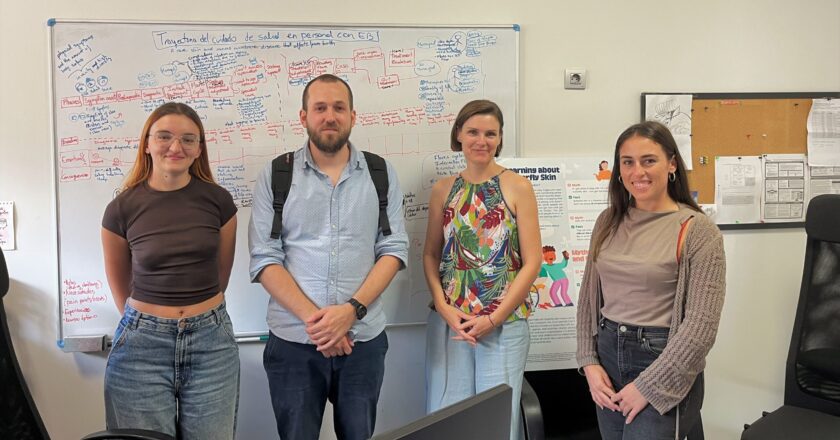
On October 8, SESCS/FIISC welcomed researcher Áron Hölgyesi, member of the Health Economics Research Center (HECON) at Óbuda University (Budapest, Hungary).

During his visit, Dr. Hölgyesi gave a scientific talk presenting the main research lines of his center, focused on health economic evaluation and the measurement of disease impact on quality of life.

He also shared the results of the cost study on Epidermolysis Bullosa (#EB) conducted within the framework of the European BUR-EB project, coordinated by researcher Renata Linertová (SESCS/FIISC). His presentation sparked discussion on the applied methodologies and the implications of the findings for health policies and rare disease management in Europe.

The visit helped strengthen collaboration between SESCS and HECON, promoting the exchange of knowledge and experience in health economics and European research on rare diseases.

Predictores sociodemográficos y clínicos de la adherencia a los antidepresivos en los trastornos depresivos: una revisión sistemática con un metanálisis

SESCS PUBLICATION: Family physicians’ attitudes and practice on screening and prevention of fragility fractures, and shared decision-making with postmenopausal women: a qualitative study in Spain

Montserrat León-García, Esther Cánovas Martínez, Yolanda Álvarez Pérez, María Antonia Pou, Alberto López García-Franco, Ana Sanz Bas, Sara Rodriguez-Moreno, Claudia Erika Delgado Espinoza, Pablo Roca, Aránzazu González Osuna, Diana Fernández Valverde, Betzabeth Marín Nanco, Melixa Medina-Aedo, Lilisbeth Perestelo-Pérez, Pablo Alonso-Coello

ABSTRACT

Background
Osteoporosis is a prevalent condition among postmenopausal women, significantly increasing the risk of fragility fractures. Despite the availability of clinical guidelines, their implementation in primary care, remains highly variable, particularly regarding fracture prevention and shared decision-making (SDM).

Methods
We conducted a qualitative study to explore the attitudes and practices of Spanish family physicians in preventing fractures among postmenopausal women. Sixteen semi-structured interviews were conducted with physicians from diverse socioeconomic backgrounds and levels of clinical experience. Data were analysed using an iterative, theory-driven approach to identify key themes and barriers.

Results
Physicians showed substantial variability in fracture risk assessment approaches, frequently combining tools such as FRAX with clinical judgment. Most were cautious about prescribing bisphosphonates for primary prevention, citing concerns about the strength of the evidence and potential adverse effects. While non-pharmacological strategies, such as lifestyle modifications and fall prevention, were emphasized, their implementation was often constrained by workload pressures. Patient involvement in decision-making was hindered by widespread misconceptions about osteoporosis and its treatment, as well as the lack of appropriate decision-support tools. Participants highlighted the need for clearer guidelines, enhanced educational resources, and accessible decision aids to facilitate patient engagement in care.

Conclusions
This study highlights the complex challenges family physicians face in fracture prevention among postmenopausal women, including heterogeneity of recommendations in guidelines, limited SDM implementation, and systemic barriers within primary care. Addressing these issues will require multifaceted interventions targeting both healthcare system constraints and patient education. Future efforts should focus on developing and implementing strategies that support evidence-based, patient-centred decision-making while accounting for the realities of primary care practice.

You can read the full article here.

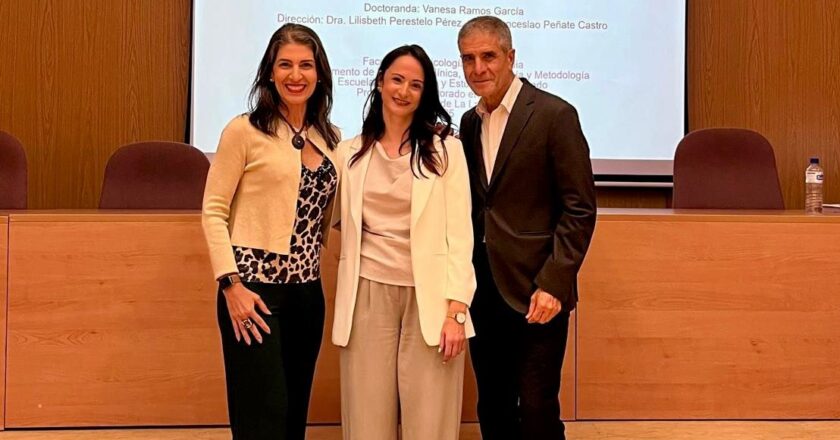
PhD Thesis on Shared Decision-Making in Generalized Anxiety Disorder: Vanesa Ramos, SESCS Researcher

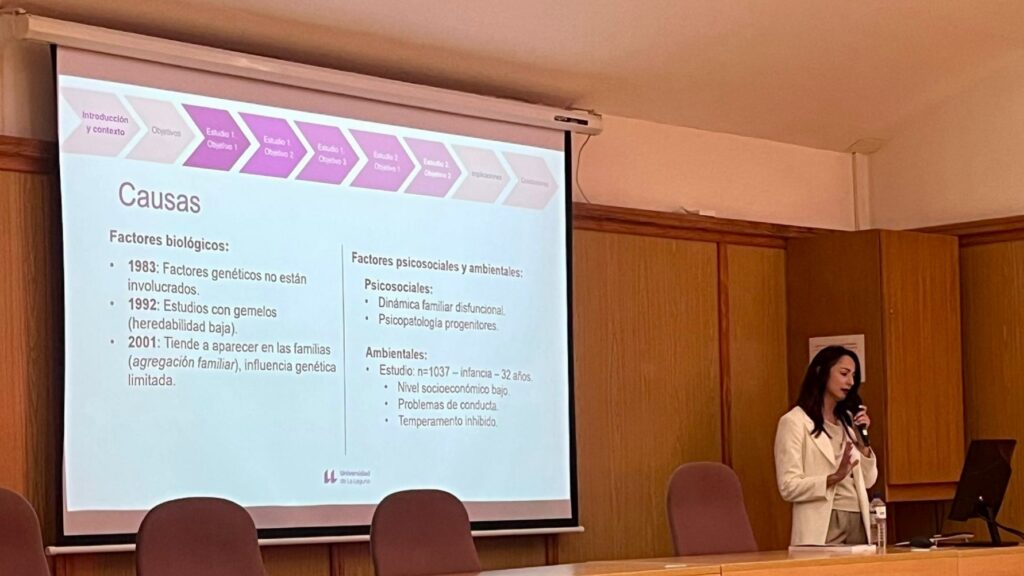
Our colleague Vanesa Ramos García, researcher at the Evaluation Service of the Canary Islands Health Service (SESCS), has recently defended her PhD thesis titled Shared Decision-Making in Generalized Anxiety Disorder.

We would like to congratulate her on this important achievement, the result of her dedication, effort, and commitment to mental health research.

A true source of pride for our entire team! 🎓

Predictores sociodemográficos y clínicos de la adherencia a los antidepresivos en los trastornos depresivos: una revisión sistemática con un metanálisis

SESCS PUBLICATION: Fostering Shared Decision-Making Between Patients and Health Care Professionals in Clinical Practice Guidelines: Protocol for a Project to Develop and Test a Tool for Guideline Developers

Lena Fischer, Fülöp Scheibler, Corinna Schaefer, Torsten Karge, Thomas Langer, Leon Vincent Schewe, Ivan D Florez, Andrew Hutchinson, Sheyu Li, Marta Maes-Carballo, Zachary Munn, Lilisbeth Perestelo-Perez, Livia Puljak, Anne Stiggelbout, Dawid Pieper

ABSTRACT

Background: Clinical practice guidelines (CPGs) are designed to assist health care professionals in medical decision-making, but they often lack effective integration of shared decision-making (SDM) principles to reflect patient values and preferences, particularly in the context of preference-sensitive CPG recommendations. To address this shortcoming and foster SDM through CPGs, the integration of patient decision aids (PDAs) into CPGs has been proposed as an important strategy. However, methods for systematically identifying and prioritizing CPG recommendations relevant to SDM and related decision support tools are currently lacking.

Objective: The aim of the project is to develop (1) a tool for systematically identifying and prioritizing CPG recommendations for which SDM is considered particularly relevant and (2) a platform for PDAs to support practical SDM implementation.

Methods: The project consists of 6 work packages (WPs). It is embedded in the German health care context but has an international focus. In WP 1, we will conduct a scoping review in bibliographic databases and gray literature sources to identify methods used to foster SDM via PDAs in the context of CPGs. In WP 2, we will conduct semistructured interviews with CPG experts to better understand the concepts of preference sensitivity and identify strategies for fostering SDM through CPGs. WP 3, a modified Delphi study including surveys and focus groups with SDM experts, aims to define and operationalize preference sensitivity. Based on the results of the Delphi study, we will develop a methodology for prioritizing key questions in CPGs. In WP 4, the tool will be developed. A list of relevant items to identify CPG recommendations for which SDM is most relevant will be created, tested, and iteratively refined, accompanied by the development of a user manual. In WP 5, a platform for creating and digitizing German-language PDAs will be developed to support the practical application of SDM during clinical encounters. WP 6 will conclude the project by testing the tool with newly developed and revised CPGs.

Results: The Brandenburg Medical School Ethics Committee approved the project (165122023-ANF). An international multidisciplinary advisory board is involved to guide the tool development on CPGs and SDM. Patient partners are involved throughout the project, considering the essential role of the patient perspective in SDM. As of February 20, 2024, we are currently assessing literature references to determine eligibility for inclusion in the scoping review (WP 1). We expect the project to be completed by December 31, 2026.

Conclusions: The tool will enable CPG developers to systematically incorporate aspects of SDM into CPG development, thereby providing guideline-based support for the patient-practitioner interaction. Together, the tool for CPGs and the platform for PDAs will create a systematic link between CPGs, SDM, and PDAs, which may facilitate SDM in clinical practice.

KEYWORDS

shared decision-making; practice guidelines as topic; decision support techniques; support; decision-making; decisions; tool;
testing tool; protocol; medical decision-making; patient decision aid; decision aid; tool development

You can read the full article here.

Cost-utility analysis of asenapine versus olanzapine in the treatment of bipolar disorder type I

Full title: Cost-utility analysis of asenapine versus olanzapine in the treatment of bipolar disorder type I

Authors (in alphabetical order): Iván Castilla Rodríguez, Leticia Cuéllar-Pompa, Lidia García Pérez, Lilisbeth Perestelo Pérez, Pilar Pinilla Domínguez, Juan Manuel Ramos Goñi, Pedro Serrano Aguilar, Cristina Valcárcel Nazco

Contact person: Juan Manuel Ramos Goñi

Objectives

To compare the efficiency of asenapine versus olanzapine (Generic Pharmaceutical Specialty – EFG) in the treatment of manic episodes in bipolar disorder type I, from both the perspective of the National Health System (SNS) and the societal perspective.