
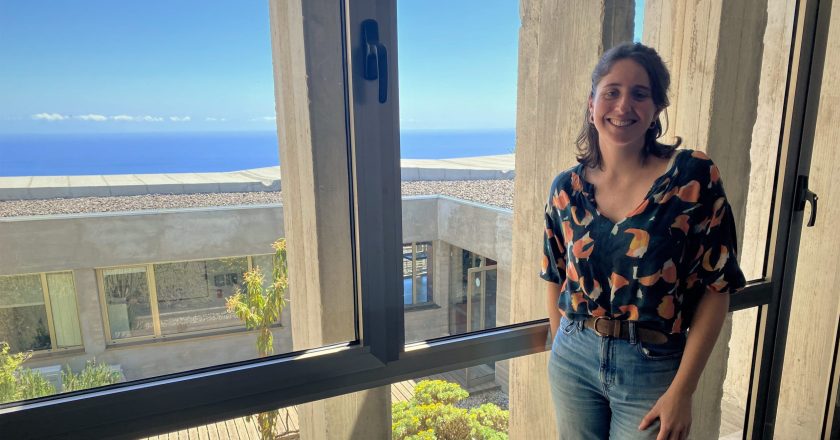
Gina Domínguez Armengol, graduada en Farmacia en la Universidad de Barcelona

Scientific visit: Gina Domínguez Armengol

Gina Domínguez Armengol graduated in Pharmacy from the University of Barcelona in 2018 and later completed a Master’s in Global Health Research at the Vrije Universiteit Amsterdam in 2021. She gained experience working in public health at the Epidemiological Surveillance Service of the Barcelonés Nord i Maresme region. Currently, she serves as a research technician at IDIAP Jordi Gol in Girona, where, in addition to participating in research projects, she is also involved in coordinating the implementation of projects related to cardiovascular health, such as the HELENA Project (a cardiovascular disease prevention program based on risk screening with the Ankle-Brachial Index).

What was the purpose of your visit?

We are currently developing a shared decision-making tool (HATDC) for peripheral arterial disease (PAD) as part of the HELENA Project. We are in the initial phase of exploring the needs of people with PAD and from the perspective of healthcare professionals. The purpose of the visit was to conduct a preliminary thematic qualitative analysis of the interviews and to determine how to translate this information for the development of the HATDC. Additionally, we aimed to define the publications that could arise from this initial phase.

Why did you choose SESCS?

I chose SESCS because we were already collaborating on the HELENA-HATDC project due to the group’s expertise in the development of HATDC and patient-centered research, as well as their extensive experience with qualitative research studies.

How will the activities conducted in collaboration with SESCS be useful in your current professional work?

The activities we carried out in recent days with the SESCS group, particularly with Analía Abt Sacks, will equip me with the necessary skills to conduct a thematic analysis during this initial phase of the HELENA-HATDC Project. Additionally, it will boost my confidence and experience in this type of analysis, allowing me to apply it to other qualitative projects my team is developing. Furthermore, the insights provided by my expert colleagues in HATDC development will be crucial in advancing this project.

Were your expectations met during this visit?

Absolutely. Besides giving me a clear understanding of how to conduct the study and develop the HATDC, they also prompted me to reflect on certain aspects of the project design. This includes identifying areas where we need to gather more information or considering additional studies, such as the cost-effectiveness analysis of the HATDC. These reflections are key to developing this project and ensuring its quality.

Comments or suggestions:

I want to express how much I enjoyed my time at SESCS. It has been a true pleasure to meet almost the entire team. I felt incredibly welcomed and enjoyed every moment of my stay. I want to extend a special thanks to Analía for her dedication over these past days. Thank you for answering all my questions and for motivating me to reflect and acquire new knowledge. Your support has been invaluable, and I truly appreciate it.
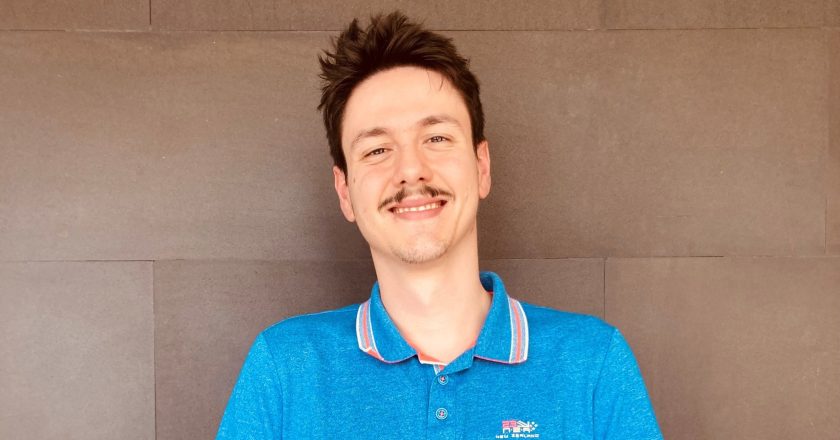
David Abbad Gómez es un graduado en Medicina por la Universidad Autónoma de Barcelona

Scientific visit: David Abbad Gómez

David Abbad Gómez is a graduate in Medicine from the Autonomous University of Barcelona (2020) and holds a Master’s in Public Health from Pompeu Fabra University in Barcelona (2023). He is currently pursuing a PhD in Biomedicine at the same institution. He is currently working as a Resident Physician in Preventive Medicine and Public Health at Hospital del Mar in Barcelona. His responsibilities include actively collaborating with the research team of the Epidemiology and Evaluation Service at the hospital, through the Hospital del Mar Research Institute, with a focus on multimorbidity and long-term survivors of breast cancer.

What was the purpose of your visit?

As part of my training as a resident and researcher, I wanted to understand the work of a team specializing in economic evaluation, explore the possibilities of incorporating concepts and methodologies into my current projects, and use this experience as a starting point to delve deeper into the field of Economic Evaluation. After some theoretical training on the topic, I had a personal curiosity to gain deeper knowledge, actively participate in a related project, and enhance my skills. The opportunity to include a partial economic analysis in my thesis arose, and I aimed to improve and apply it extensively in my future career.

We also used my visit to discuss and share, in person, the possibilities we saw in the joint CONCEPT-SURBCAN project and to collaborate more closely.

Why did you choose SESCS?

Currently, both institutions are working together on the CONCEPT-SURBCAN project to conduct the cost analysis of the cohort, and on the qualitative aspect of the FOLLOW-UP SURBCAN project. Additionally, both are part of RICAPPS, which had already established communication between the two parties. My mentors and supervisors, who were somewhat familiar with the team, encouraged me to plan a visit as they considered it an ideal place to learn and to satisfy my curiosity on the subject.

Moreover, due to the joint CONCEPT-SURBCAN project, my experience with the cohort could contribute to mutual support and benefit both parties from my visit.

How will the activities carried out in collaboration with SESCS be useful in your current professional work?

What I have observed in these days will help me address the partial economic analysis proposed for my thesis. In addition to this initial assistance, seeing the types of projects, methodologies, and materials used has broadened my perspective on economic evaluation and has opened up possibilities for my future. My interest in the topic has only increased, and I am convinced that it will help me conduct more complex analyses in the future.

Did your expectations for this visit meet?

Completely.

Comments or suggestions:

One thing I would like to highlight from these days, which is not reflected in the previous questions, is the great human quality of the team and the immense pleasure of meeting everyone. I am eager to continue collaborating in the future.