Predictores sociodemográficos y clínicos de la adherencia a los antidepresivos en los trastornos depresivos: una revisión sistemática con un metanálisis

SESCS publication: Genicular artery embolization for knee osteoarthritis: a systematic review with meta-analysis and cost-analysis

Aránzazu Hernández-Yumar, Yadira González-Hernández, Tasmania del Pino-Sedeño, Cristina Valcárcel-Nazco, Aythami de Armas-Castellano, Estefanía Herrera-Ramos, Julián Portero Navarro, Montserrat Carmona-Rodríguez, María Ximena Rojas-Reyes, María M. Trujillo-Martín

ABSTRACT

Objetive

To assess the effectiveness, safety, and cost-effectiveness of genicular artery embolization (GAE) for the treatment of mild or moderate knee osteoarthritis (KO) refractory to standard treatment, and/or severe KO in individuals not eligible for surgery.

Method

We conducted a systematic review with meta-analysis, supplemented by a cost-analysis, comparing GAE and standard treatment, from the perspective of the Spanish National Health System (NHS) over a one-year time horizon. The health improvement required for GAE to be deemed cost-effective was quantified, considering a willingness-to-pay threshold of 25 000 €/quality-adjusted life year (QALY).

Results

We included two randomized controlled trials in our analysis. Pain estimates showed inconsistent results, and no significant effects were observed for overall function, health-related quality of life, or changes in the need for pain management medication. No serious complications or major adverse events were observed. GRADE quality of evidence ranged from moderate to low. No economic evaluations were identified. Our cost-analysis revealed that GAE would result in an incremental cost of € 3432.37 per patient, requiring a health improvement of 0.137 QALY per patient to be deemed a cost-effective technology.

Conclusions

In summary, based on moderate to low-certainty evidence, it remains inconclusive whether there is any difference between GAE and standard treatment for KO. However, the use of GAE would increase the costs. Larger randomized controlled trials are needed to determine the effects of using GAE for chronic pain secondary to KO and, consequently, to ascertain whether this technology could potentially become cost-effective from the NHS perspective.

Keywords

Genicular artery; Embolization; Knee osteoarthritis; Pain; Systematic review; Economic evaluation.

You can read the full article here.
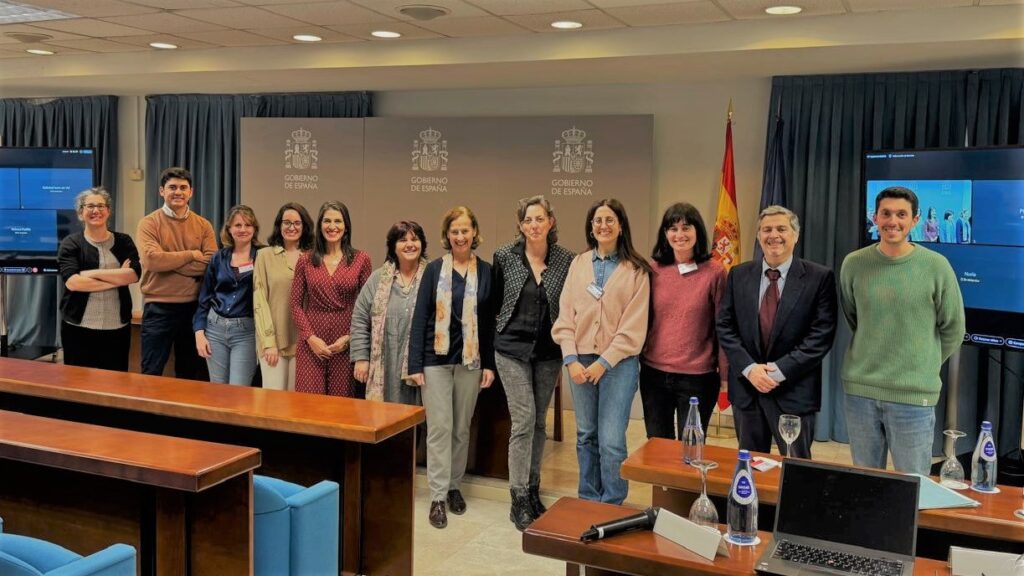
RedETS Plenary at the Ministry of Health: SESCS Assumes the Presidency Until 2026

Since March 13, the Health Technology Assessment Service of the Canary Islands Health Service (SESCS) has assumed the Presidency of #RedETS and the Health Technology Assessment Unit (#UETS) of the Community of Madrid, the Vice-Presidency, until 2026.

A new challenge that we take on with determination and commitment, reinforcing collaboration among agencies to continue driving Health Technology Assessment within the National Health System.

We appreciate the recognition from the Technical Secretariat, which highlighted our commitment and excellence. We will continue moving forward together to strengthen decision-making based on the best available evidence.

Instituto Aragonés de Ciencias de la Salud (IACS)

Axencia Galega de Coñecemento en Saúdeavalia – t

Agència de Qualitat i Avaluació Sanitàries de Catalunya (AQuAS)

Instituto de Salud Carlos III

AETSA – Fundación Progreso y Salud

Osteba -Osasun ebaluazioa- BIOEF

Predictores sociodemográficos y clínicos de la adherencia a los antidepresivos en los trastornos depresivos: una revisión sistemática con un metanálisis

SESCS PUBLICATION: Correlates of Control Preferences, Participation in Decision-making and Activation in Patients with Substance Use Disorder

Pedro Serrano-Pérez, Amado Rivero-Santana, Constanza Daigre-Blanco, Raúl Felipe Palma-Álvarez, Icía Nistal-Franco, Josep Antoni Ramos-Quiroga, Lara Grau-López

Background: Treatment of Substance Use Disorder (SUD) is complex and therefore including patients in the therapeutic process is needed. Patient-Centered Care (PCC) and Shared Decision-Making (SDM) have been associated with greater satisfaction, self-control, and less substance use. However, correlates of SDM have not been investigated in this population.

Method: A cross-sectional analysis was carried out in 214 SUD patients to identify sociodemographic, clinical and psychological correlates of preferences and perceptions about participation in SDM and degree of activation. The Control Preference Scale (CPS), the Shared Decision-Making Questionnaire (SDM-9-Q) and the Patient Activation Measure (PAM) were used to assess the PCC elements. Multinomial logistic regression was used to analyze the correlates of the CPS variables (preferred role, perceived role, and role matching). For SDM-9-Q and PAM, multilevel linear regression was used.

Results: Preferring an active role, compared to a shared one, was significantly associated with higher educational level, lower neuroticism, absence of affective and alcohol use disorders, and higher quality of life. Perceiving greater participation was significantly associated with not being a new patient, having fewer legal problems, higher severity of alcohol consumption, not presenting polydrug use and main substance use different than opioids or sedatives. Activation was associated with higher scores in the personality trait activity, a preference for an active role and greater perception of being involved in the decision process.

Conclusions: Patients with milder clinical profiles prefer an active role compared to a shared one. Patients who prefer or perceive a shared or passive role did not show relevant differences. Greater activation was related to preference for an active role and the perception of having been involved in decisions.

Keywords
shared decision-making; patient preference; substance use disorder; patient autonomy

You can read the full article here.

Scientific visit: Cristina Barrufet González

Cristina Barrufet González holds a degree in Nursing from the Escola Superior d’Infermeria del Mar (2018), a Master’s Degree in Public Health from Universitat Pompeu Fabra (2021), and is currently enrolled in the Biomedicine doctoral program at the same institution. Since 2019, she has been the nurse for the Colorectal Cancer Screening Program in the Epidemiology and Evaluation Service at Hospital del Mar. She is also a member of the Epidemiology and Evaluation Research Group at the Hospital del Mar Research Institute, focusing on risk-based early detection of colorectal cancer and the development of new communication strategies.

What was the objective of the visit?

The main objective was to learn from their extensive experience in the field of co-creative methodology and person-centered care, areas that align with my doctoral thesis project. Additionally, I aimed to exchange experiences and expand my knowledge of shared decision-making tools, as well as to work in person on a joint project that includes a cost-effectiveness analysis. Finally, I sought to identify potential future collaboration opportunities and establish synergies within the framework of RICAPPS.

Why did you choose SESCS?

Both institutions collaborate on the FIS project “PI20/00009 Personalised colorectal cancer screening: feasibility assessment of a tailored risk-based approach.” There is a long-standing partnership between both groups, so when our team expressed interest in starting a project that included co-creative methodology, the suggestion to carry out a research stay at SESCS to learn from their experience in this field naturally emerged.

How will you apply, or how might you benefit from, the activities conducted in collaboration with SESCS in your current professional work?

A corto plazo, las actividades realizadas en colaboración con el SESCS se reflejarán en el diseño del proyecto de investigación de mi tesis doctoral, así como en el desarrollo del proyecto FIS conjunto, que abordaremos durante el próximo año. A medio y largo plazo, se contempla la posibilidad de participar en futuros proyectos a nivel nacional y de establecer colaboraciones en el marco de la RICAPPS.

In the short term, the activities carried out in collaboration with SESCS will be reflected in the design of my doctoral thesis research project, as well as in the development of the joint FIS project, which we will address over the coming year. In the medium and long term, there is the possibility of participating in future national projects and establishing collaborations within the framework of RICAPPS.

Did this visit meet your expectations?

Undoubtedly, despite the short duration of the stay (5 days), the researchers at SESCS welcomed me warmly and organized highly engaging activities. These included in-person work on joint projects, participation in virtual co-creation sessions, informative meetings with key area representatives and researchers from the Person-Centered Care group, as well as participation in the group’s sessions. I consider this stay an excellent opportunity to strengthen current collaborations and identify future lines of action.

Comments or suggestions:

Although it was a very brief stay, it was extremely intense both professionally and personally. Getting to know the SESCS team has been a truly rewarding and heartfelt experience.

Predictores sociodemográficos y clínicos de la adherencia a los antidepresivos en los trastornos depresivos: una revisión sistemática con un metanálisis

SESCS PUBLICATION: Fostering Shared Decision-Making Between Patients and Health Care Professionals in Clinical Practice Guidelines: Protocol for a Project to Develop and Test a Tool for Guideline Developers

Lena Fischer, Fülöp Scheibler, Corinna Schaefer, Torsten Karge, Thomas Langer, Leon Vincent Schewe, Ivan D Florez, Andrew Hutchinson, Sheyu Li, Marta Maes-Carballo, Zachary Munn, Lilisbeth Perestelo-Perez, Livia Puljak, Anne Stiggelbout, Dawid Pieper

ABSTRACT

Background: Clinical practice guidelines (CPGs) are designed to assist health care professionals in medical decision-making, but they often lack effective integration of shared decision-making (SDM) principles to reflect patient values and preferences, particularly in the context of preference-sensitive CPG recommendations. To address this shortcoming and foster SDM through CPGs, the integration of patient decision aids (PDAs) into CPGs has been proposed as an important strategy. However, methods for systematically identifying and prioritizing CPG recommendations relevant to SDM and related decision support tools are currently lacking.

Objective: The aim of the project is to develop (1) a tool for systematically identifying and prioritizing CPG recommendations for which SDM is considered particularly relevant and (2) a platform for PDAs to support practical SDM implementation.

Methods: The project consists of 6 work packages (WPs). It is embedded in the German health care context but has an international focus. In WP 1, we will conduct a scoping review in bibliographic databases and gray literature sources to identify methods used to foster SDM via PDAs in the context of CPGs. In WP 2, we will conduct semistructured interviews with CPG experts to better understand the concepts of preference sensitivity and identify strategies for fostering SDM through CPGs. WP 3, a modified Delphi study including surveys and focus groups with SDM experts, aims to define and operationalize preference sensitivity. Based on the results of the Delphi study, we will develop a methodology for prioritizing key questions in CPGs. In WP 4, the tool will be developed. A list of relevant items to identify CPG recommendations for which SDM is most relevant will be created, tested, and iteratively refined, accompanied by the development of a user manual. In WP 5, a platform for creating and digitizing German-language PDAs will be developed to support the practical application of SDM during clinical encounters. WP 6 will conclude the project by testing the tool with newly developed and revised CPGs.

Results: The Brandenburg Medical School Ethics Committee approved the project (165122023-ANF). An international multidisciplinary advisory board is involved to guide the tool development on CPGs and SDM. Patient partners are involved throughout the project, considering the essential role of the patient perspective in SDM. As of February 20, 2024, we are currently assessing literature references to determine eligibility for inclusion in the scoping review (WP 1). We expect the project to be completed by December 31, 2026.

Conclusions: The tool will enable CPG developers to systematically incorporate aspects of SDM into CPG development, thereby providing guideline-based support for the patient-practitioner interaction. Together, the tool for CPGs and the platform for PDAs will create a systematic link between CPGs, SDM, and PDAs, which may facilitate SDM in clinical practice.

KEYWORDS

shared decision-making; practice guidelines as topic; decision support techniques; support; decision-making; decisions; tool;
testing tool; protocol; medical decision-making; patient decision aid; decision aid; tool development

You can read the full article here.
NEW PUBLICATION: Clinical Practice Guideline for the Treatment of Generalized Anxiety Disorder in Primary Care

NOW AVAILABLE: Clinical Practice Guideline for the Treatment of Generalized Anxiety Disorder in Primary Care!

This guideline, coordinated by the Evaluation and Planning Service of the Canary Islands Health Service (SESCS) and funded by the Ministry of Health, is part of the Clinical Practice Guidelines Program of the National Health System (GuiaSalud).

It updates the 2008 document with the latest advances in GAD treatment.

Helps reduce variations in how the disorder is treated.

Encourages collaboration between Primary Care and Mental Health.

Enhances the quality of care and improves patients’ quality of life.

Who is this guideline for?

  • Healthcare professionals in Primary Care (physicians, nurses, psychologists, pharmacists, and social workers).
  • Patients with GAD, their families, and caregivers.
  • Educational groups and scientific societies.

What does this guideline offer?

  • Evidence-based recommendations for initial care, treatment, and referral to Mental Health services.
  • A patient version designed to support shared decision-making and improve communication with healthcare providers.

Developed following high-quality standards like the GRADE system, it ensures clear, evidence-based recommendations.

This guideline was created with the collaboration of experts and patient associations to ensure it is patient-centered.

🔗 Access the full guideline here

XI RedETS Conference 2024

The XI Jornadas RedETS 2024 has been an exceptional event for Health Technology Assessment. Over the past days, the Evaluation Service of the Canary Islands Health Service (SESCS) actively participated in workshops, discussion panels, and presentations, sharing knowledge and reflecting on key topics such as gender in HTA, the environmental dimension, and ethical challenges in the digital era.

The event kicked off with an inspiring workshop on Gender in Health Technology Assessment and the Development of Clinical Practice Guidelines, setting the stage for content-packed sessions.

Key contributions from SESCS included:

🗣️ Renata Linertová, presenting the results of the FORM-EE project on how to communicate economic evaluations to non-technical audiences.
🌍 Estefanía Herrera Ramos, showcasing a decision-making algorithm to incorporate the environmental dimension into health technology assessment.

Additionally, our Head, Lilisbeth Perestelo Pérez, moderated a crucial panel discussion on ethics and consent in the data era, a fundamental topic in today’s context.

If you missed it, you can access the full program and watch the sessions on-demand here:

Full Program
On-demand Sessions

We extend our gratitude to the entire team and attendees who made this event possible. We remain committed to advancing a more equitable and innovative healthcare system!

RedETS | Ministerio de Sanidad | IACS Aragón | Gobierno de Aragón 

Don’t miss the photo gallery from the event below! 👇

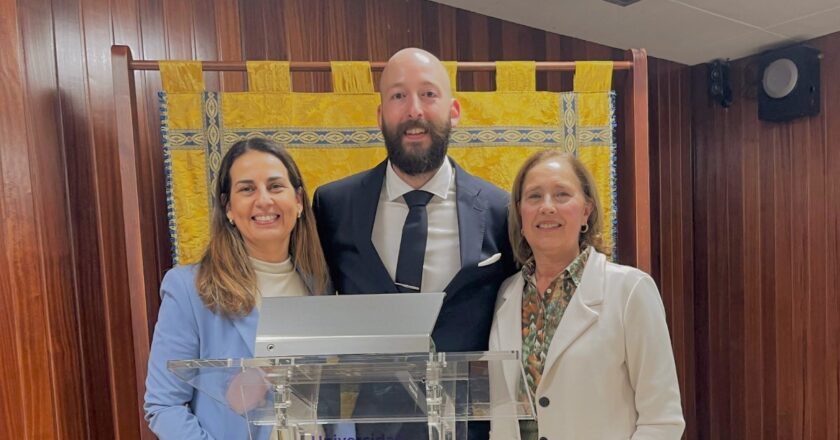
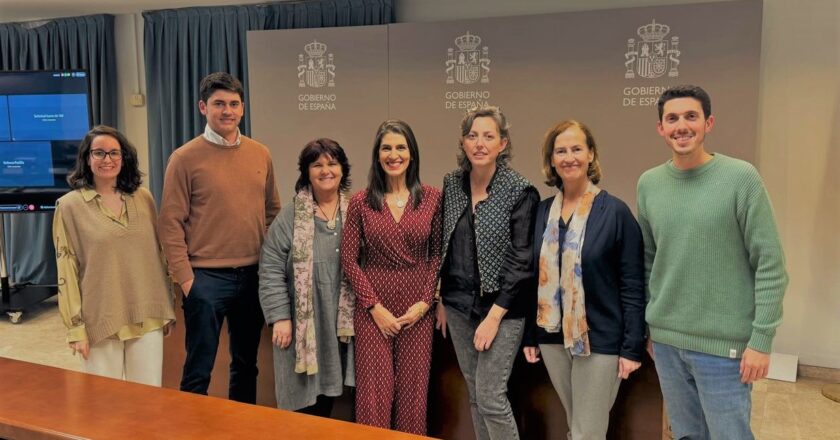
Here we see our Head of Department, Lilisbeth Perestelo Pérez, alongside part of our outstanding team of SESCS researchers, and in the following photo, with representatives of HTA Agencies and the RedETS Secretariat. We are proud of this representation! 👇

Presentation by our SESCS researcher, Renata Linertová: “How to Present Economic Evaluations to Non-Technical Audiences?” – Results from the FORM-EE project.

Presentation by Estefanía Herrera Ramos from SESCS: “Decision Algorithm to Incorporate the Environmental Dimension in Health Technology Assessment,” alongside Analia Abt Sacks from IACS Aragón.

Our SESCS Head, Lilisbeth Perestelo Pérez, moderating Panel 3: “Let’s Talk About a Challenge: Ethics and Consent in the Data Era.” A crucial debate on the ethical challenges of the digital age.

After the final panel, the XI RedETS Conference transitioned into a relaxed moment with two members of RISArchers, who entertained us with clever monologues. A creative closing to an enriching event.


SESCS PUBLICATION: Effectiveness of Psychological Interventions in Endometriosis: A Systematic Review with Meta-Analysis

del Pino-Sedeño T, Cabrera-Maroto M, Abrante-Luis A, González-Hernández Y, Ortíz Herrera M C.

ABSTRACT

Introduction: Endometriosis is a chronic gynecological disease associated with chronic debilitating pain, poor mental health and quality of life. The objective of this paper is to evaluate the effectiveness of psychological interventions aimed at improving the pain, quality of life and mental health of women with endometriosis.

Methods: A systematic review (SR) of the literature with meta-analysis (MA) was carried out. MEDLINE, Embase, PsycINFO and CENTRAL were searched to locate Randomized Controlled Trials (RCTs). The risk of bias assessment of each study was conducted using the Cochrane Collaboration’s RoB 2.0 tool.

Results: Seven RCTs were included (N = 757). The data obtained suggest that psychological interventions reduce dyspareunia [standardized mean difference (SMD): -0.54, 95% CI: −0.86, −0.22] and dyschezia [mean difference (MD): -2.90, 95% CI: −4.55, −1.26] and increase mental health levels (SMD: 0.70, 95% CI: 0. 42, 0.99); they also point to a large reduction in levels of trait anxiety (MD: -6.63, 95% CI: −8.27, −4.99) and depression (MD: -2.49, 95% CI: −3.20, −1.79), and a likely reduction in state anxiety (MD: -9.72, 95% CI: −13.11, −6.33) experienced by women with endometriosis. It was also identified that psychological interventions probably slightly reduce pelvic pain and may increase physical health. However, most of the included studies have a high overall risk of bias or have certain concerns, which limit conclusions about the certainty of the evidence.

Discussion: The available evidence indicates that psychological interventions are effective in improving the pain, quality of life and mental health variables of women with endometriosis.

You can read the full article (in English) here.

Scientific visit: María Rodríguez García

María Rodríguez García (For citations/databases: M. Rodriguez-Ayllon) holds a degree in Physical Activity and Sports Sciences from the University of Granada. In 2017, she began her Ph.D. in Biomedicine, where she explored the role of physical activity on mental and brain health during childhood and adolescence. In 2020, she earned her Ph.D. from the University of Granada with international distinction and was awarded the Extraordinary Doctorate Award.

In 2021, she received a two-year international scholarship from the Ramón Areces Foundation to continue her research at the Erasmus University Medical Center in Rotterdam (Netherlands). During this period, she was constantly surrounded by researchers from various fields, which allowed her to view health from a multidisciplinary, person-centered perspective. Additionally, she published articles in high-impact journals (such as JAMA Psychiatry). She also received further funding from the Alicia Koplowitz Foundation and participated as an expert in physical activity and health in European networks focused on preventive and personalized medicine, such as ALIVE (A Life Course and Individual-based View on Lifestyle to Enhance Health) and ExACT (European Network Staff Exchange for Integrating Precision Health in Health Care Systems). Her professional journey is marked by its international and multidisciplinary nature, as well as her approach to health from a preventive, individualized perspective—key aspects for advancing toward a more active, healthy society.

In 2024, she joined the Biomedical Research Center of Málaga under a postdoctoral Sara Borrell contract within the SAMSERAP research group, which specializes in designing, developing, and evaluating digital tools for the prevention of common mental disorders such as depression and anxiety. Her goal is to increase physical activity levels in young people and protect their mental health through a multidisciplinary, individualized, inclusive, and innovative approach.

What was the objective of the visit?

  • To learn about ongoing projects at SESCS.
  • To establish new synergies among groups and strengthen existing ones.
  • To learn about co-creation methodologies and person-centered care.
  • To learn about the implementation of digital tools within the National Health System.
  • To learn about systems and tools for evaluating digital health tools, especially those that aid in shared decision-making between professionals and patients.

Why did you choose SESCS?

Because I admire its values and approach to healthcare from a preventive, multidisciplinary, and person-centered perspective. Also, for its expertise in co-creation, development of decision-making support tools, patient empowerment, and the evaluation and implementation of digital tools within the healthcare system.

How will you apply, or how might you benefit from, the activities conducted in collaboration with SESCS in your current professional work?

By incorporating the knowledge I gained into my current and future research projects. During my stay at SESCS, I understood the importance of ensuring that scientific results are useful, accepted, and transferable to our society.

Did this visit meet your expectations?

Yes, and they were even exceeded, not only due to the scientific and professional quality but also due to the human quality.

Scientific Conference “Shared Decision Making (SDM): A Scientific Approach to Collaborative Decision Making”

On October 29th, the Scientific Conference “Shared Decision Making (SDM): A Scientific Approach to Collaborative Decision Making” successfully concluded. Once again, with the prominent participation of the Evaluation and Planning Service of the Canary Islands Health Service (SESCS).

The opening featured the presence of María Fernández García from the Ministry of Health, Madrid, and Elena Gonzalvo Suñer, from IACS Aragón.

A moment from the session moderated by Lilisbeth Perestelo Pérez, head of SESCS, “Methodology for the Development of Decision Support Tools in Shared Decision Making (SDM-DST).” It is essential to address this topic in daily practice.

María José Vicente Edo, Secretary of GuiaSalud, shared her insights on the application of Clinical Practice Guidelines recommendations to Shared Decision Making (SDM). An essential approach to improving practice.

Here you can see a group photo, post-event, with speakers, organizers, and attendees. What a great team!

Lilisbeth Perestelo Pérez alongside Paulina Bravo from the Arturo López Pérez Foundation, Chile, after the closing presentation on “How Shared Decision Making Becomes a Culturally Relevant Practice in the New Spanish Social Context.”

In this last image, Lilisbeth Perestelo Pérez is pictured with her fellow researchers from SESCS, Beatriz León Salas and Vanesa Ramos García, who were also present as attendees at this insightful learning event!

We thank all the participants, speakers, and organizers who made this event possible. Let’s continue working together for a more effective Shared Decision Making!